
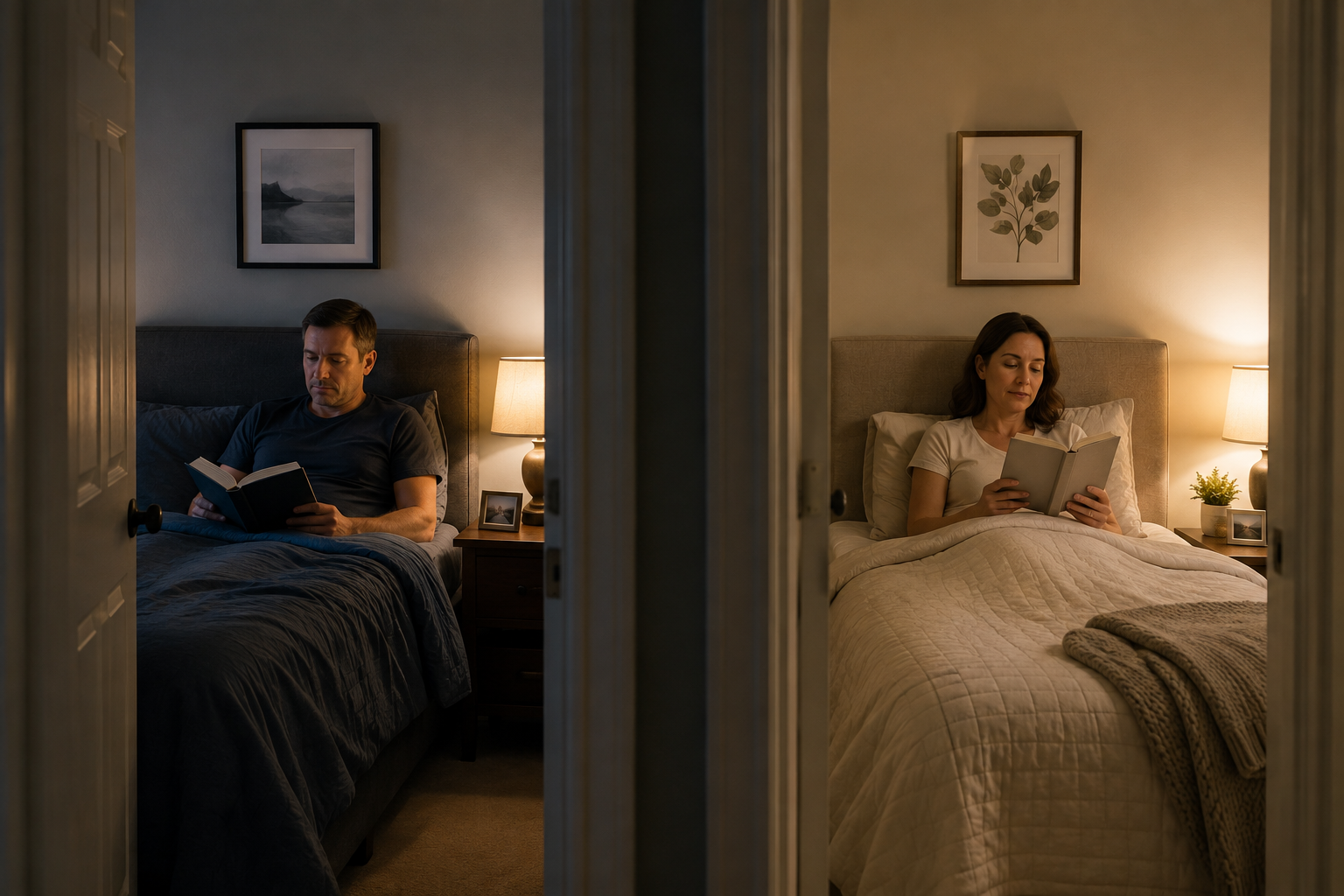
A recent celebrity roundup revealed just how many well-known couples sleep in separate bedrooms, separate apartments, or even separate homes.
The arrangement has become common enough to earn its own name: a “sleep divorce.”
Despite the dramatic label, choosing to sleep separately does not necessarily mean a couple is headed for divorce. For some couples, separate bedrooms improve sleep, reduce resentment, and make daily life more manageable. For others, they become a physical representation of an emotional distance that already exists.
In my therapy office, I’m hearing about separate sleeping arrangements more and more. Some couples describe the change as one of the best decisions they have made. Others mention it with embarrassment, sadness, or a sense that they no longer know how to find their way back to each other.
I probably fall somewhere in the middle on this issue.
I don’t believe sharing a bed automatically makes a relationship close. I also don’t believe sleeping separately automatically means a marriage is in trouble.
What matters is the intention behind the arrangement and what happens to the relationship after the bedroom doors close.
In my own past marriage, sleeping in separate bedrooms meant we were in trouble.
It was not a practical decision we reached together because someone snored or needed uninterrupted sleep. Separate sleeping was weaponized during conflict. It communicated anger, rejection, and withdrawal.
The bedroom became a source of angst for me rather than a place of rest.
That experience is part of why I don’t see separate bedrooms as completely neutral. Where we sleep can carry emotional meaning. Leaving the shared bedroom after a fight can send a message, even if nothing is said aloud.
Sometimes the message is, “I need a little space so I can calm down.” That can be reasonable, particularly if the alternative is escalating an already painful argument.
But sometimes the message is, “I am withholding closeness until you give in,” or, “You no longer get access to me because I’m angry.”
That is different.
When sleeping separately is used to punish, control, create anxiety, or leave one partner guessing about the status of the relationship, the issue is not sleep. The arrangement has become part of the couple’s conflict pattern.
It can also happen more quietly. A couple has a terrible fight, and one person moves to the guest room. Neither person knows how to repair the rupture, so no one brings up moving back. Days become weeks. Eventually, the arrangement becomes normal without ever becoming mutual.
The separate bedrooms are not helping them rest. They are helping them avoid what has happened between them.
There are also plenty of practical reasons couples may choose not to share a bed.
One person snores. The other is a light sleeper. Someone works nights or wakes up much earlier. One partner moves constantly, needs the television on, likes the room freezing cold, or has a health condition that regularly disrupts sleep.
In those situations, staying in the same bed at all costs may not be the most loving choice.
Chronic exhaustion affects mood, patience, attention, and the ability to regulate emotions. Two people who are continually waking each other up may spend their days irritable and resentful, only to repeat the cycle again that night.
Separate bedrooms can sometimes remove that unnecessary source of conflict.
The key difference is that the couple has discussed the arrangement and chosen it together. Neither partner feels banished, rejected, or quietly abandoned. They both understand what the decision means and, just as importantly, what it does not mean.
It means, “We sleep better this way.”
It does not mean, “We no longer want to be close.”
When couples ask whether sleeping separately is healthy, I think the better question is:
What does sleeping separately mean in your relationship?
Consider the following:
The answers tell us much more about the health of a relationship than the number of bedrooms being used.
A couple can share a bed every night and remain profoundly disconnected. They may scroll on separate phones, avoid touching, and fall asleep without exchanging more than a few words.
Another couple may sleep in different rooms and still have a warm, affectionate, and sexually connected relationship.
Proximity and connection are not the same thing.
But proximity does create natural opportunities for connection. When couples stop sharing a bed, they may lose small moments they did not realize mattered. The few minutes spent talking in the dark. The kiss before falling asleep. The spontaneous touch in the middle of the night. The lazy conversation on a weekend morning.
If you remove the shared bed, you may need to replace those moments intentionally.
If separate bedrooms genuinely work better for you, the arrangement should include a plan for protecting your relationship.
Spend ten or fifteen minutes together before going to your separate rooms. Talk, cuddle, pray, watch part of a show, or simply check in about the day.
The ritual does not have to be elaborate. Its purpose is to make sure “good night” still feels like connection rather than departure.
Physical touch can easily decrease when couples sleep apart. Make room for hugging, kissing, sitting close, and touching without every moment having to lead to sex.
Affection is one of the ways couples continue to communicate, “We are still us.”
When couples share a bed, sex can happen spontaneously. Separate bedrooms may require more communication and planning.
Planning does not make intimacy less meaningful. But avoiding the topic and hoping it somehow takes care of itself often leads to misunderstanding and rejection.
An arrangement that worked six months ago may not work now. Ask each other occasionally:
“Does this still feel good to you?”
“Do you feel connected to me?”
“Is there anything you miss about sharing a room?”
The goal is not to pressure either person into changing the arrangement. It is to make sure both people still have a voice in it.
Some couples sleep separately during the workweek and together on weekends. Others start the night together and move to another room when the snoring begins.
There is no rule that says the decision must be all or nothing. Couples can create an arrangement that supports both sleep and closeness.
Separate bedrooms can be practical, considerate, and healthy. They can also become a socially acceptable way to avoid conflict, vulnerability, or physical closeness.
That is why intention matters.
If sleeping separately helps both of you rest while remaining emotionally and physically connected, it may work perfectly well for your relationship.
If it leaves one person feeling punished, unwanted, anxious, or alone, it deserves a deeper conversation.
The healthiest sleeping arrangement is not necessarily the one that looks the most traditional. It is the one that allows both people to rest without letting the relationship go to sleep too.

April Eldemire is a licensed Marriage and Family Therapist and couples therapist at Couples Thrive in Fort Lauderdale, Florida. She helps couples, individuals, and families work through relationship disconnection, communication breakdowns, infidelity, new-parenthood transitions, divorce-related stress, family conflict, grief, depression, and parenting challenges. April is trained in Gottman-Method Couples Therapy and Emotionally Focused Therapy, two research-based approaches used to help couples better understand negative interaction patterns, rebuild emotional connection, and strengthen the relationship over time.