
We’ve all been there.
Your partner says that thing.
Your chest tightens.
Your brain lights up with ten perfect comebacks—each one sharper than the last.
The text you’re about to send feels powerful. Final. Justified.
It’s also a relationship grenade.
Before you hit send, try something different.
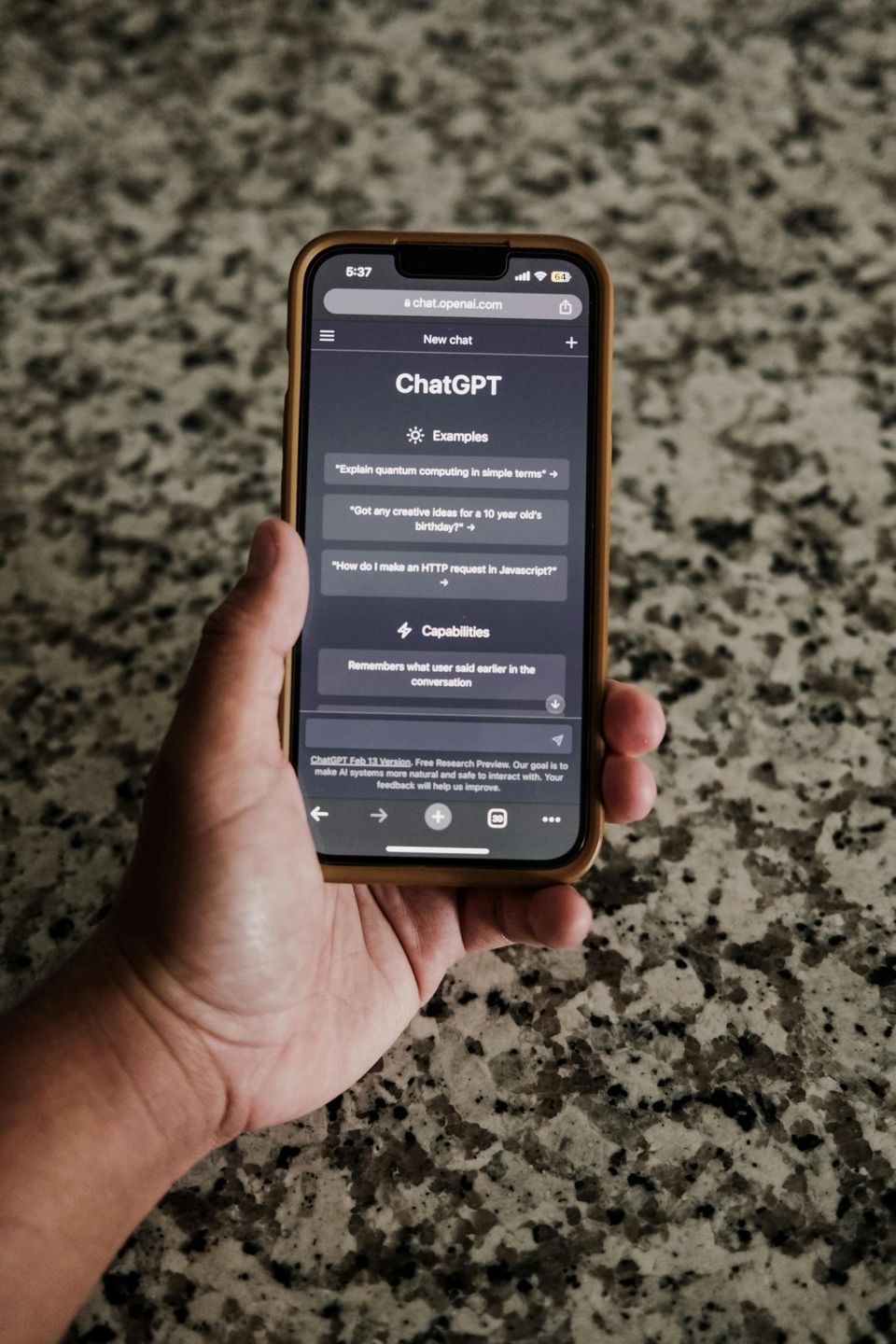
Open ChatGPT.
Yes, really.
Over the past year, I’ve watched clients—and couples—use ChatGPT as a digital pause button in moments of emotional flooding. Instead of rage-texting, spiraling, or venting to a friend who only fans the flames, they pause, type everything out, and ask for help saying what they actually mean.
Not softer.
Not smaller.
Just clearer. Safer. More connected.
Used well, ChatGPT doesn’t replace communication skills. It supports emotional regulation, perspective-taking, and boundary-setting in moments when your nervous system is running the show.
Here are five prompts you can use in 2026 to stop damaging arguments before they escalate—and turn conflict into connection instead.
1. “Here’s what I want to say to my partner. Can you rewrite this in a way that’s calm, clear, and non-reactive?”
Use this when: You’re emotionally flooded and seconds away from saying something you’ll regret.
Your raw message might sound like:
“Wow. Thanks for embarrassing me—again. You clearly don’t care.”
That message delivers impact. It does not deliver repair.
Try this instead:
“Here’s what I’m feeling: I felt hurt, embarrassed, and dismissed. Can you rewrite this so I’m honest without attacking?”
ChatGPT might suggest:
“When that happened, I felt really hurt and embarrassed. I don’t think that was your intention, but it impacted me deeply. I’d like to talk about it when we’re both in a better space.”
Same truth.
Different delivery.
Massively different outcome.
This is boundary-setting as a bridge, not a divider.
2. “Can you help me understand what might be going on for my partner—assuming they’re not trying to hurt me?”
Use this when: You’re taking everything personally and spiraling into worst-case assumptions.
When emotions run high, our brains love stories:
They don’t care.
They’re selfish.
This always happens.
This prompt invites empathy without dismissing your feelings:
“My partner has been distant and short all week. I feel hurt and annoyed. Can you help me explore what might be going on for them?”
Often, ChatGPT will gently reflect:
“They may be overwhelmed, stressed, or emotionally shut down. Withdrawal is sometimes a sign of overload, not indifference.”
Perspective doesn’t excuse behavior—but it de-escalates reactivity, which is where real conversations can finally happen.
3. “I want to repair this, but I don’t know how to start. Can you help me write a message that opens the door to reconnection?”
Use this when: There’s been a rupture and pride is blocking the repair.
Maybe you snapped.
Maybe you shut down.
Maybe you said something you wish you could take back.
Try:
“We had a fight and I regret how I handled it. Can you help me write a message that takes responsibility and invites reconnection?”
A grounded repair might sound like:
“I’ve been thinking about our conversation and I’m sorry for how I showed up. I let my emotions take over. When you’re ready, I’d like to talk and find our way back to each other.”
Repair isn’t weakness.
It’s emotional leadership.
4. “Can you turn this rant into a reflective journal entry so I can process without dumping it on my partner?”
Use this when: You need to vent—but not at the person you love.
Conflict often comes with layers: resentment, grief, disappointment, fear. Those feelings deserve space—but not always immediate expression.
Try:
“Here’s everything I want to say right now. Can you turn this into a journal reflection that helps me understand what I’m really feeling and needing?”
This moves you from reaction to reflection.
Often, once emotions are processed internally, the external conversation becomes calmer, clearer, and far less explosive.
5. “What would a securely attached, emotionally grounded version of me say right now?”
Use this when: You want to grow—not just win the argument.
This prompt shifts the focus from being right to being aligned.
Try:
“I want to respond from security, not fear. Can you rewrite this from the perspective of someone who values boundaries, respect, and connection?”
Over time, this practice rewires how you show up in conflict. What starts as an assisted rewrite becomes muscle memory.
You’re not faking maturity.
You’re rehearsing it.
Final Thoughts: Don’t Just Pause—Partner With AI
In heated moments, it can feel like there are only two options: explode or shut down.
There’s a third path: express with intention.
ChatGPT isn’t about outsourcing your voice. It’s about refining it—especially when your nervous system is hijacked and your best self feels out of reach.
Used thoughtfully, it becomes a tool for emotional regulation, clearer boundaries, and deeper connection.
So next time you’re tempted to rage-text, stonewall, or say something that can’t be taken back—pause.
Open ChatGPT.
Let it help you turn conflict into clarity, and boundaries into bridges.

April Eldemire is a licensed Marriage and Family Therapist and couples therapist at Couples Thrive in Fort Lauderdale, Florida. She helps couples, individuals, and families work through relationship disconnection, communication breakdowns, infidelity, new-parenthood transitions, divorce-related stress, family conflict, grief, depression, and parenting challenges. April is trained in Gottman-Method Couples Therapy and Emotionally Focused Therapy, two research-based approaches used to help couples better understand negative interaction patterns, rebuild emotional connection, and strengthen the relationship over time.